Most of what we build is small: an app that does one thing well on one device. CyberTell is the opposite. It is a hosted platform for the security of a whole organisation, and it is the biggest and most ambitious project we have ever taken on.
Why it had to be this big
Security work in a small or mid-sized company tends to be scattered. The phishing test lives in one tool, the training in another, the policy in a shared folder and the emergency plan in somebody's head. When something happens, none of these know about each other.
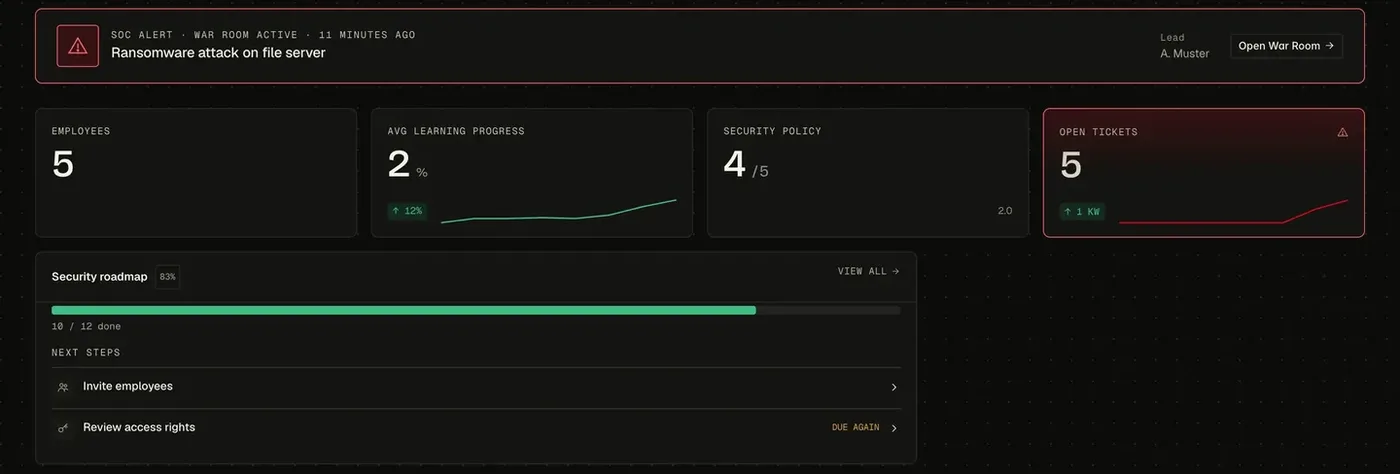
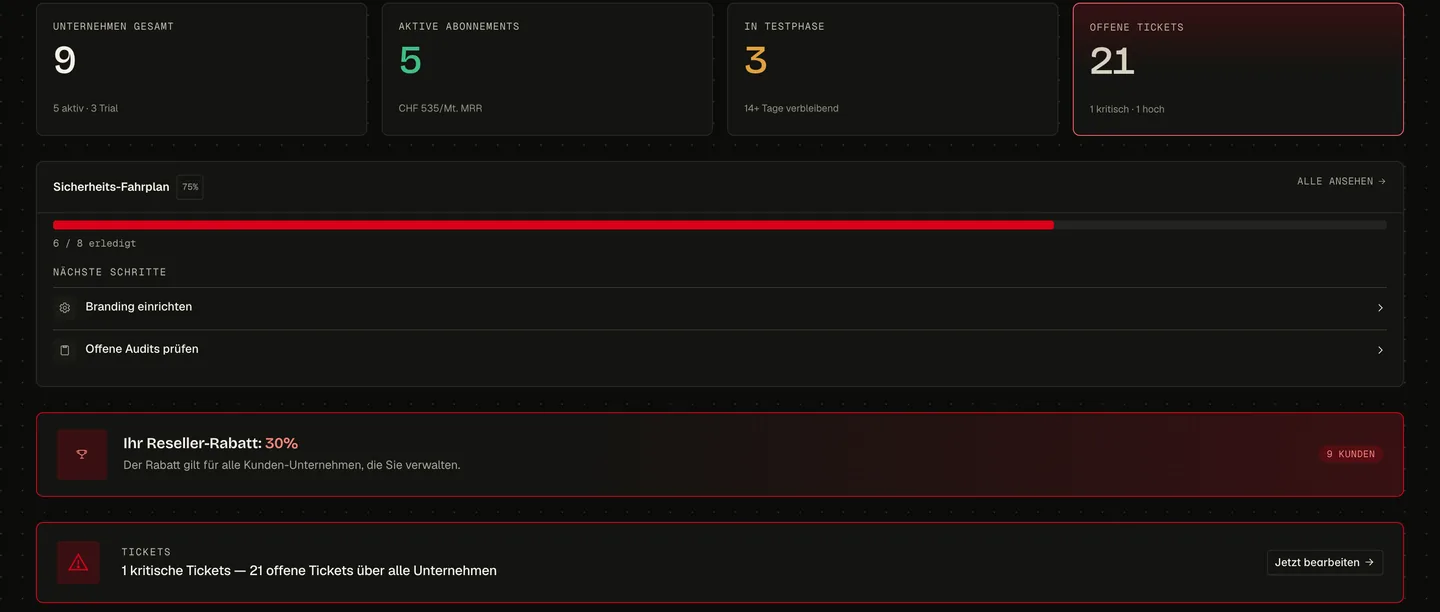
So we put them in one place. A failed phishing test can lead straight to a course. A real incident gets a ticket, a crisis channel and a playbook. The overview above shows the result: one page that answers how things stand today. Since the end of February, around 4,700 commits have gone into the repository, and the portal now has more than twenty modules in four languages.
Train people on what really arrives
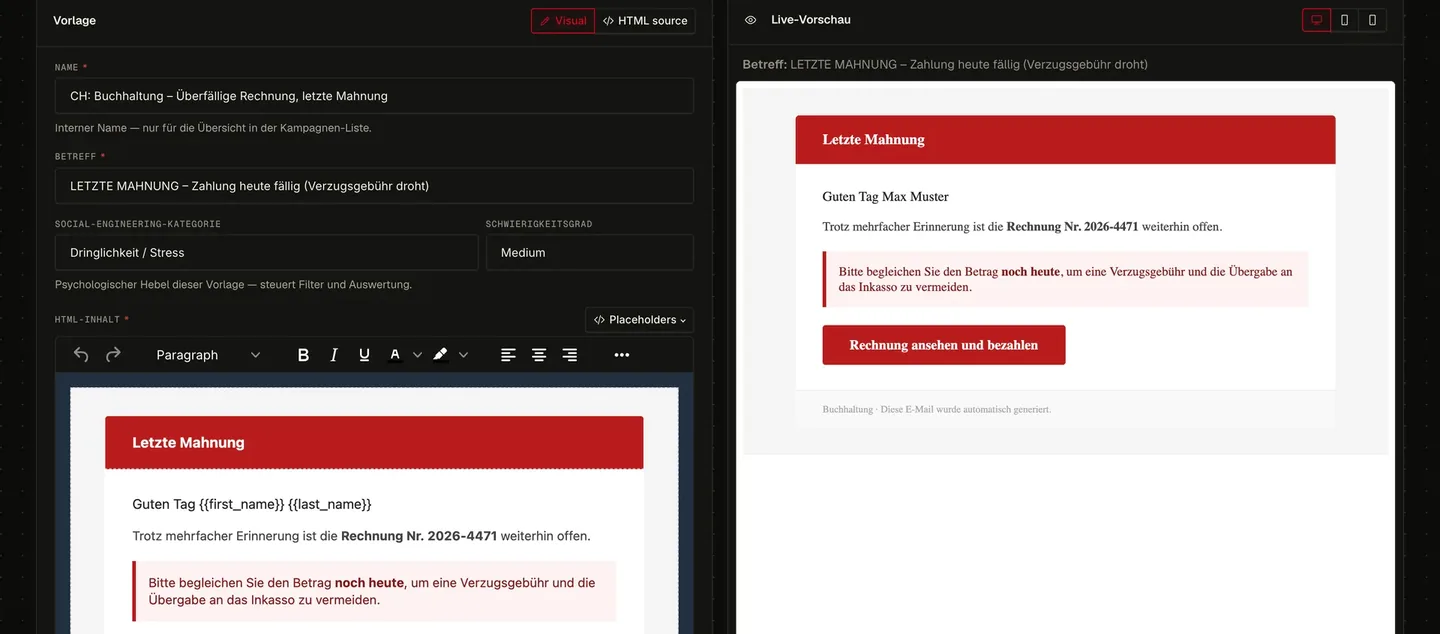
Phishing campaigns run with ready-made Swiss templates or your own EML files. CyberTell records who opened, clicked or entered data, and can assign a course after a failed test. Vishing simulations add the voice channel, with AI-generated voice messages sent over WhatsApp and SMS.
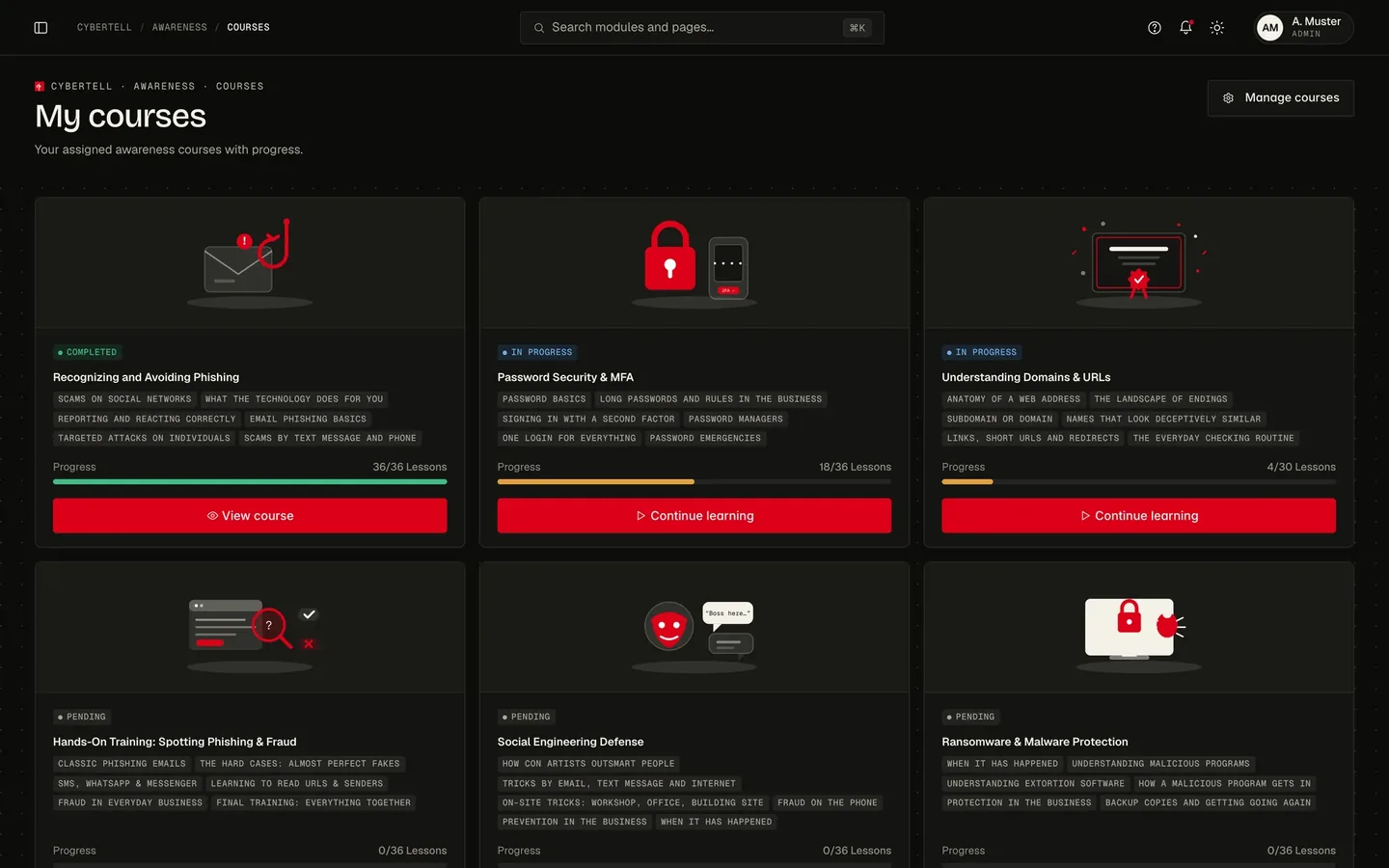
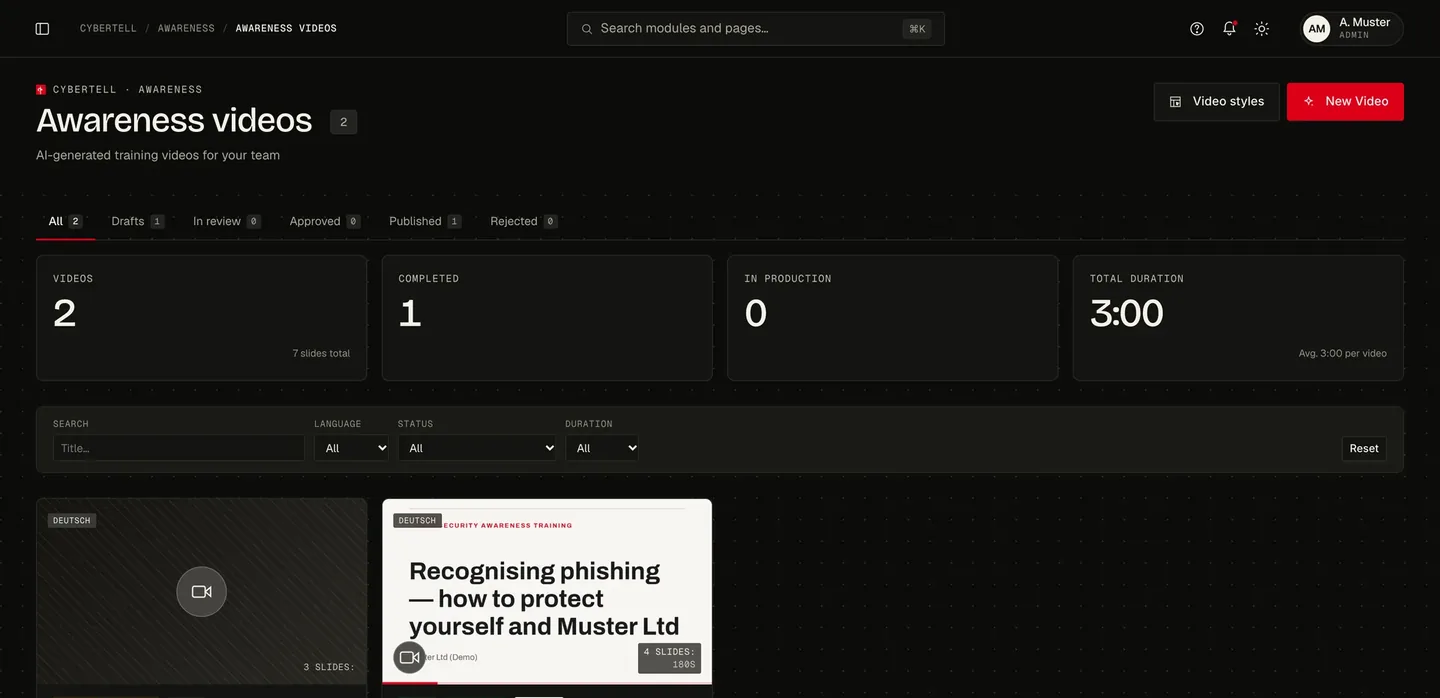
The courses have lessons, exams and certificates. If a topic is missing, the awareness video module drafts the script and slides with AI, adds a voiceover, and renders a training video for your team. Companies that want to can also turn points for security activities into CHF rewards, with a monthly cap per person.
Know where you stand
The security policy is written directly in the portal, section by section. Employees acknowledge it digitally, and each version stays on record. Assessments follow the Swiss ICT Minimum Standard, ISO 27001 and NIST CSF, and separate checks look at Active Directory and Microsoft Entra ID. An asset register, supplier risk management and a data protection area with records of processing round this out.
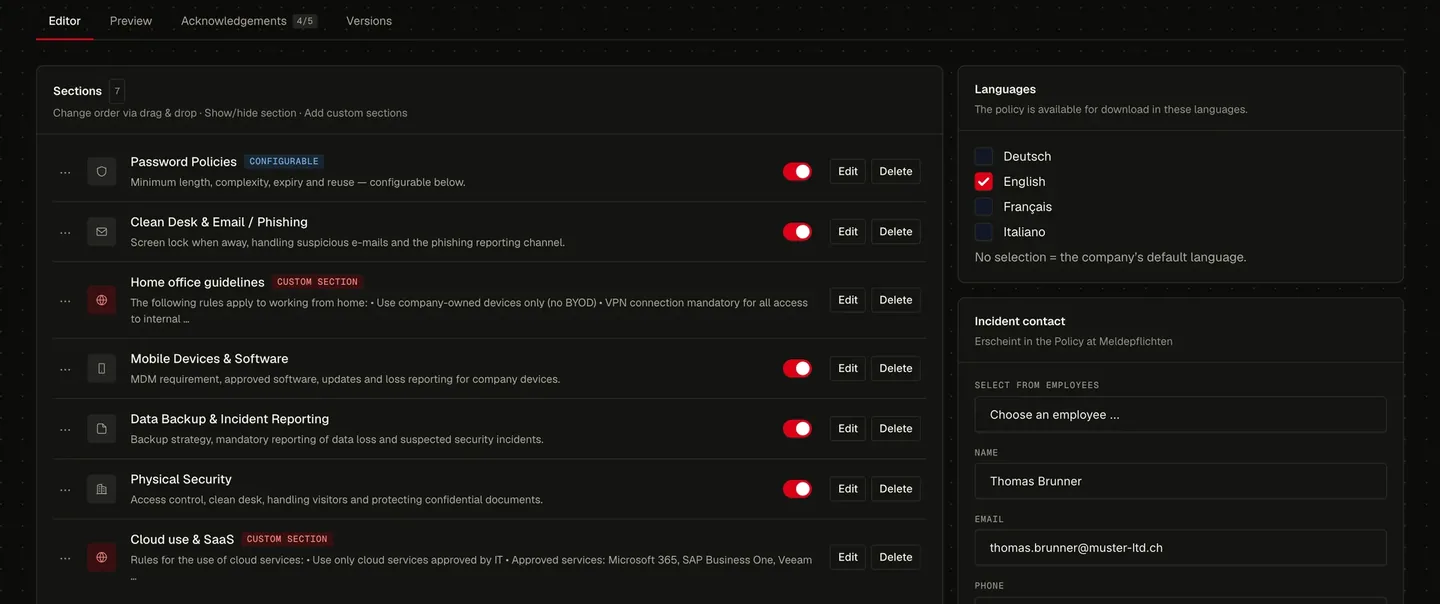
All of this helps you do the work and show it. It does not replace an audit or a certification.
Ready when something happens
Incidents are handled as tickets, and a war room gives the team a dedicated chat linked to them, with files and a chronological record. A MITRE ATT&CK view shows the tactics and techniques that matter for your kinds of assets. AI-generated playbooks and tabletop exercises, based on your company profile, let you practise before it counts.
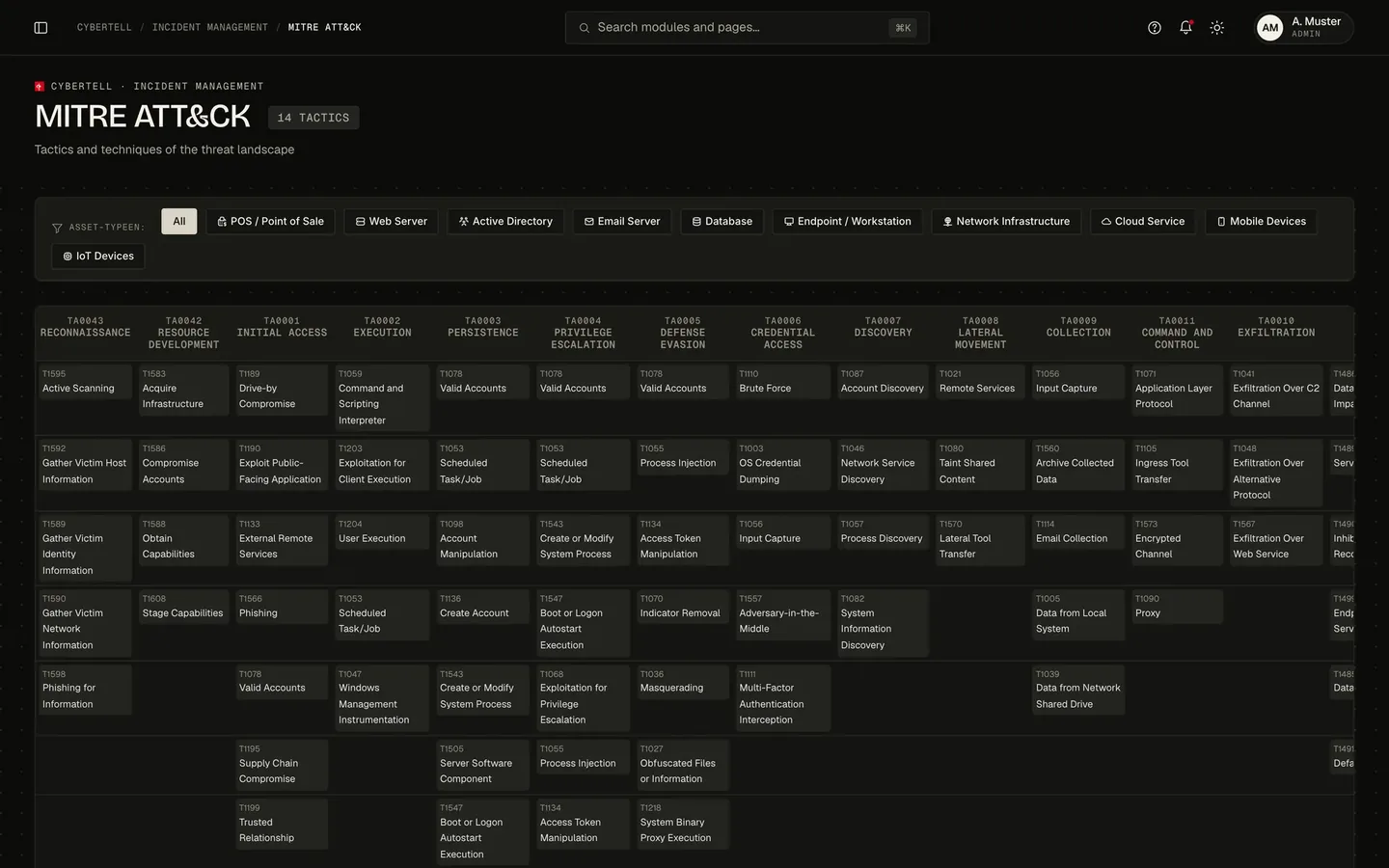

A pentester in a box
One of our favourite parts is Pi Pentest. A preconfigured Raspberry Pi sits in your own network, CyberTell controls it remotely, and it runs WLAN assessments, vulnerability scans and credential tests. The findings arrive in the portal, ready for a PDF report. As with any test of this kind, it belongs only on networks you are authorised to test.
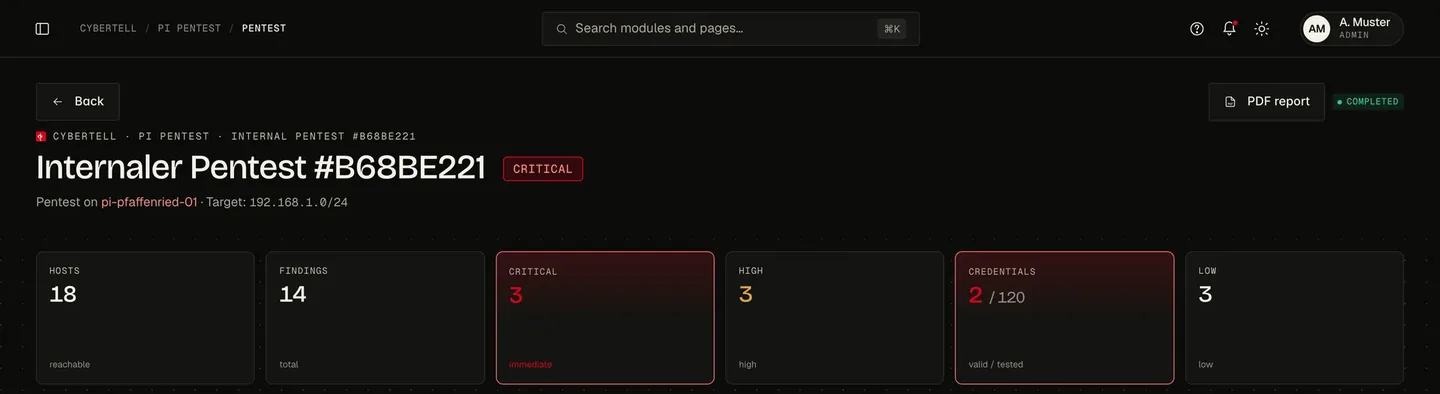
Not only for companies
CyberTell has separate portals for different people, each with its own way of working:
- Private users and families get courses, a check for leaked email addresses and an analysis of suspicious messages.
- IT partners look after several client companies from one place, including tickets and audits.
- Police have a case management portal, which is currently in beta.
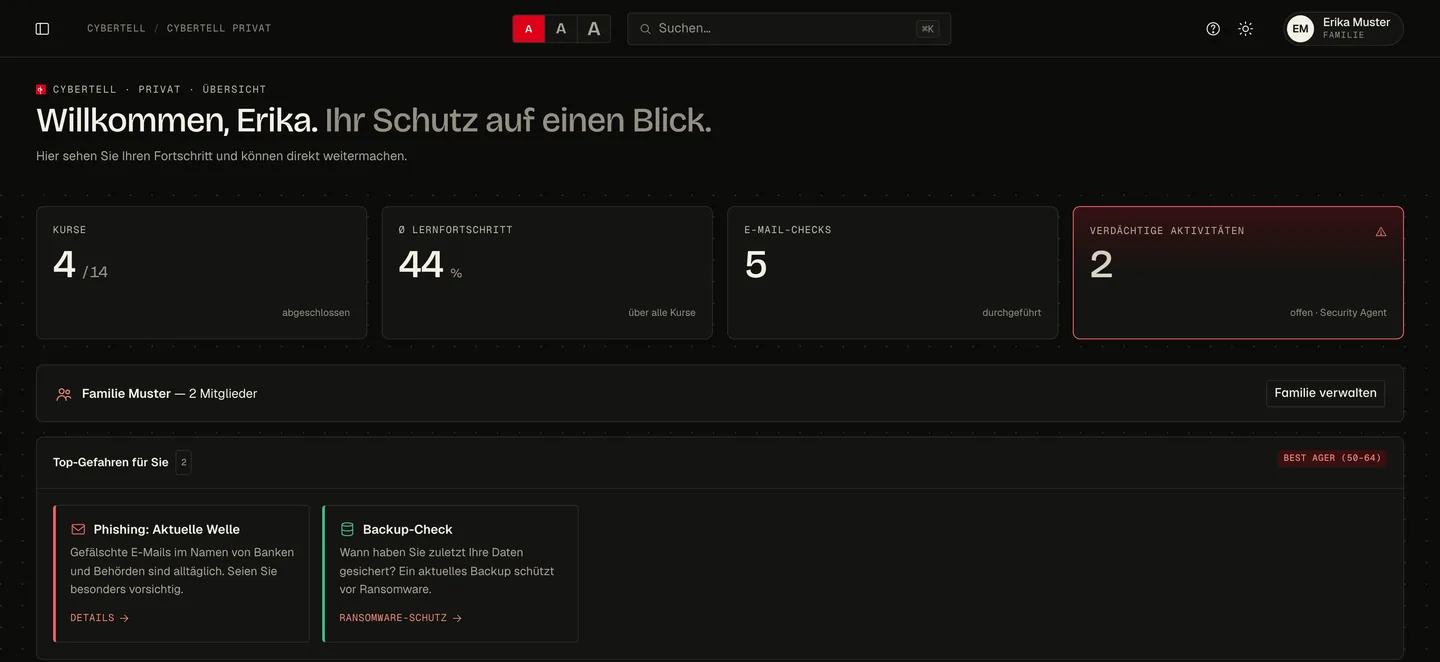
Native apps are in progress too. The iOS and macOS versions are in testing on TestFlight, and Android, Windows and Linux are being built.
What we want to be clear about
CyberTell is hosted in Switzerland. Some functions rely on outside services, including ones in the US, for example the AI features and parts of the email analysis. We would rather say that here than hide it behind a label.
The screenshots show demo data with invented companies and people, and they are cropped.